

Downtime starts with a failure nobody explained. These handy blogs break down servo and proportional valve problems, amp card issues, and what it takes to fix them right.
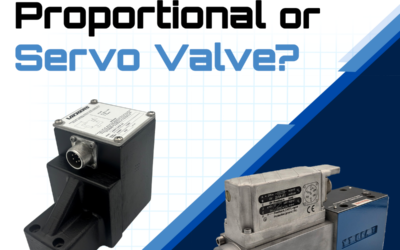
Proportional vs. Servo Valves: What’s Different?
Your machine won't hold a position. It's drifting, hunting, or chattering under load. Someone on the floor says, “it's the valve.” Fair enough. But which valve? Proportional or servo? Get that wrong and you order the wrong part, wait on the wrong lead time, or pay for...
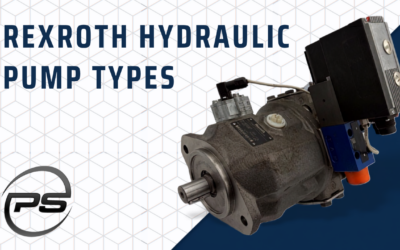
Pump Types & Advanced Servo Repair Needs
Rexroth Hydraulics, now known as Bosch-Rexroth after a 2001 brand acquisition, boasts a history of remarkable engineering and reliability. Rexroth electro-hydraulic pumps are a staple in demanding mobile and industrial applications, valued for their high...
Electro-Hydraulic Pump Repair: A Valuable Technical Partnership
Servo and proportional valves get most of the attention in industrial hydraulics conversations, but a bigger opportunity is often overlooked. Electro-hydraulic pump repair service requires precision mechanics and onboard electronics, which are becoming standard...
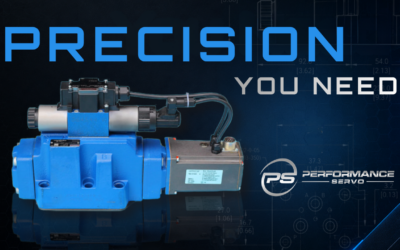
Precision Rexroth and Proportional Valve Repair and Calibrations
Did you know Performance Servo specializes in precision repair and calibration of Rexroth servo and proportional valves, alongside high-performance remanufacturing for Rexroth SYDFEE electro-hydraulic pump systems? Well, we do. And more importantly, we do it fast and...
Understanding Servo Valve Failure Modes – MOOG
Servo valves are the most precise component in a hydraulic control loop, which also makes them the most sensitive to wear, contamination, and electrical drift. When a machine starts behaving erratically, the servo valve is often blamed last and diagnosed least — even...
Proportional vs. Servo: What’s the Difference? — Moog
Proportional and servo valves both convert an electrical signal into precise, variable hydraulic flow or pressure, and from the outside they can look nearly identical. But the internal construction, tolerances, and intended application are different enough that using...
Signs Your Amp Card Needs Repair — Moog
The amplifier card is the electronic bridge between your control system and the servo or proportional valve — and it's one of the most overlooked components when a hydraulic system starts acting up. Because a failing amp card can produce symptoms that look mechanical,...
Rexroth 4WRPE vs. 4WRPH: Choosing the Right Servo Valve — Rexroth
Rexroth's 4WRPE and 4WRPH series are both high-performance proportional/servo valves built around onboard electronics, and at a glance the model numbers alone don't tell you much about which one belongs in your system. The difference comes down to control...
Common Failure Points in Rexroth Proportional Valves — Rexroth
Rexroth proportional valves — including the 4WRA, 4WRZ, and 3DREP series — are built to handle demanding industrial and mobile hydraulic duty, but like any precision component they have predictable points of failure. Knowing where to look first can save significant...
VT-VRPA Amplifier Troubleshooting — Rexroth
The VT-VRPA is one of Rexroth's most widely used amplifier cards, controlling spool position on a range of proportional and servo valves. When a system starts misbehaving, it's tempting to swap the amplifier first — but a surprising number of VT-VRPA-related...
D1FP vs. D3FP: Understanding Parker’s Proportional Valve Lineup — Parker
Parker's D1FP and D3FP series are both directional proportional valves built around onboard electronics, and the model numbers alone don't tell you much about which one belongs in your system. The real difference comes down to flow capacity, spool configuration, and...
BD15 / BD30 Servo Valve Failure Points and What They Mean — Parker
Parker's BD15 and BD30 servo valves are built for high-precision, high-bandwidth control in demanding test and industrial applications. Because they operate on tight internal tolerances, they're also more sensitive to specific failure modes than a standard directional...
D41F Series Troubleshooting — Parker
Parker's D41F series proportional valves are a common workhorse in industrial and mobile hydraulic circuits, and like any proportional valve with onboard electronics, response and drift issues can come from several different places. Before assuming the valve itself...
KDG4V vs. KFDG4V: Understanding Vickers’ Proportional Valve Series — Vickers
Vickers' KDG4V and KFDG4V series are both directional proportional valves widely used across Eaton's industrial and mobile hydraulic lineup, and the model numbers alone don't make the distinction obvious. The real difference comes down to feedback type, control...
SM4 / SX4 Servo Valve Failure Points and What They Mean — Vickers
Vickers' SM4 and SX4 servo valves are built for precise, high-response control in demanding industrial applications. Like any servo valve operating on tight internal tolerances, they have a handful of predictable failure points — knowing where to look first can save...
Troubleshooting Vickers Proportional Flow & Pressure Controls — Vickers
Vickers proportional flow and pressure control valves are common throughout industrial and mobile hydraulic systems, regulating flow rate or downstream pressure in proportion to an electrical command signal. When one starts misbehaving, the cause isn't always the...
DHZO vs. DLHZO: Understanding Atos’ Proportional Directional Valves — Atos
Atos' DHZO and DLHZO series are both proportional directional valves used across industrial and mobile hydraulic systems, and the naming convention alone doesn't make the distinction obvious. The real difference comes down to onboard electronics, feedback type, and...
DKZOR Pressure Valve Failure Points and What They Mean — Atos
Atos' DKZOR series proportional pressure valves regulate system pressure in proportion to an electrical command signal, and like any proportional pressure control, they have a handful of predictable failure points. Knowing where to look first can save significant...
E-MI/E-BM Amplifier Card Troubleshooting for Atos Valves — Atos
Atos' E-MI and E-BM series amplifier cards drive spool or pilot position on a wide range of Atos proportional and servo valves. When a system starts misbehaving, it's tempting to swap the amplifier first — but a meaningful number of E-MI/E-BM complaints trace back to...
EPCG2 vs. EPFG: Understanding Tokyo Keiki’s Proportional Pressure Valves — Tokyo Keiki
Tokyo Keiki's EPCG2 and EPFG series are both proportional pressure valves used across industrial hydraulic systems, and the naming convention alone doesn't make the distinction obvious. The real difference comes down to valve function, control range, and how each...
ST3 Servo Valve Failure Points and What They Mean — Tokyo Keiki
Tokyo Keiki's ST3 series servo valves are built for high-precision, high-response control in demanding industrial and test applications. Because they operate on tight internal tolerances, they share the same handful of predictable failure points common to precision...
STC-Y Servo Valve Controller Troubleshooting — Tokyo Keiki
The STC-Y is Tokyo Keiki's controller for its servo valve lineup, managing command signal conditioning and closed-loop feedback for connected valves. When a system starts misbehaving, it's tempting to assume the servo valve itself has failed — but a meaningful share...
EFBG vs. EBG: Understanding Yuken’s Proportional Relief Valves — Yuken
Yuken's EFBG and EBG series are both proportional electro-hydraulic relief valves, and the naming convention alone doesn't make the distinction obvious. The real difference comes down to flow capacity, construction, and the level of energy-saving functionality each...
EHDG Amplifier-Equipped Valve Failure Points and What They Mean — Yuken
Yuken's EHDG series integrates a proportional directional valve with an onboard amplifier, giving it closed-loop control without requiring a separate external controller. That integration makes installation simpler, but it also means the electronics and mechanical...
Yuken Power Amplifier Troubleshooting — Yuken
Yuken's power amplifiers drive spool or pilot position on a wide range of proportional valves, including the EFBG, EBG, and EHFBG series. When a system starts misbehaving, it's tempting to swap the amplifier first — but a meaningful share of complaints trace back to...
Servo or Proportional Valve Giving You Trouble?
Send it in for expert servo valve repair or proportional valve repair. We'll diagnose it, rebuild it to spec, and get it back to you ready to run.
Electro-Hydraulic Pump Acting Up on You?
Don't guess. Send your electro-hydraulic pump our way and we'll track down the issue, restore it, and have you back up fast.
Electronics Repair for Proportional Valves
Don't guess. Send your electro-hydraulic pump our way and we'll track down the issue, restore it, and have you back up fast.