
A servo valve doesn’t usually die all at once. It drifts. It gets sluggish. It starts hunting around setpoints instead of holding it. By the time it fails outright, you’ve probably been fighting bad parts or scrap cycles for weeks without knowing why.
Servo valves run tighter tolerances than almost anything else in your hydraulic system, which means small problems show up as big performance issues fast. Here’s what takes them down, and what to look for before a valve turns into a full failure.
1. Contamination
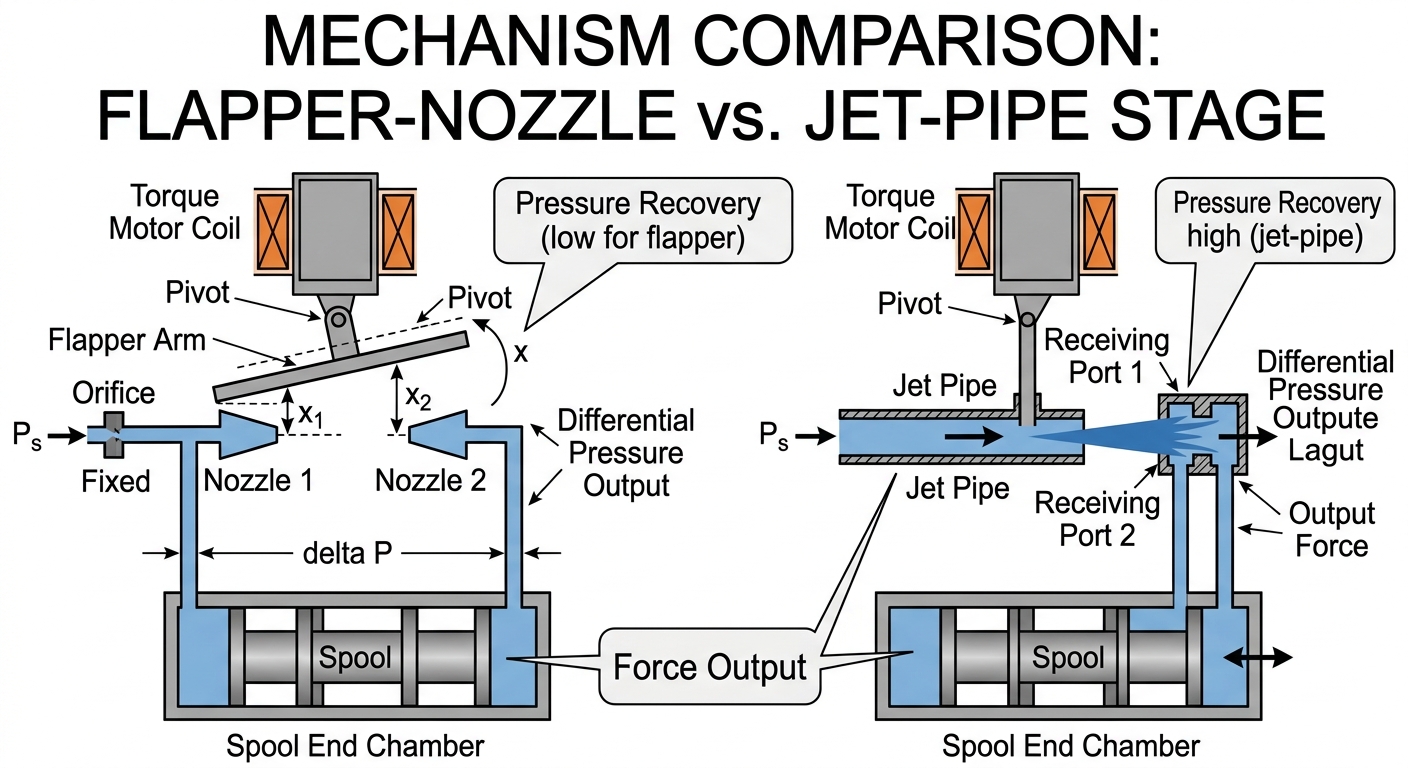
This is the number one killer, hands down. Servo valves run clearances measured in microns. A torque motor driving a flapper-nozzle or jet-pipe stage, feeding a spool with orifices that are small, doesn’t leave much room for dirt, varnish, or metal fines.
What it looks like on the machine:
- Erratic response or the valve sticking mid-stroke
- Null shift, the valve won’t center where it used to
- Reduced flow gain or a sluggish response to command signal
Contamination doesn’t have to be dramatic to cause damage. A single stuck particle in a nozzle or a scored spool from fine metal fines is enough to throw off the whole control loop. Filtration and clean fill practices matter more here than on almost any other component in the system.
2. Spool and Sleeve Wear
The spool rides on the sleeve with clearances tight enough that even light wear changes how the valve flows. Wear usually comes from contamination acting like lapping compound, or from years of dither, the small constant vibration servo valves used to prevent the spool from sticking.
Worn spools show up as increased leakage, reduced null stability, and a valve that won’t hold position as tightly as it used to. Once the clearance opens, no amount of cleaning fixes it. That’s a machining and fit issue, not a cleaning issue.
3. Torque Motor and Coil Failure
The torque motor is the electromechanical heart of the valve, converting your electrical command into mechanical motion at the first stage. Coils fail from age, heat, moisture intrusion, or voltage transients. A short circuit or open coil kills the valve’s ability to respond at all or causes it to respond unevenly between directions.
Signs of a torque motor issue:
- No response, or response in only one direction
- Unusual current draw compared to spec
- Erratic behavior that changes with vibration or temperature, pointing to an intermittent winding issue
4. Null Shift and Drift
Null shift means the valve no longer centers where it should with zero command signal. It can come from spool or sleeve wear, a bent or fatigued feedback spring, contamination lodged in the null-adjustment area, or age-related changes in the torque motor’s magnetic circuit.
A small amount of null shift is normal over a valve’s life and can often be corrected during calibration. Large or fast-moving shift usually points to a mechanical problem that needs a teardown, not just a re-cal.
5. Feedback Wire and Spring Fatigue
Most servo valves use a mechanical feedback spring or wire to close the loop between the torque motor and the spool. These are precision parts, and they fatigue and can crack after enough cycles, especially in high-frequency dynamic applications. A cracked feedback spring usually shows up as instability or oscillation that gets worse under load, not a clean shutdown.
6. Electrical Connector and Wiring Issues
Not every failure is inside the valve. Corroded pins, loose connectors, chafed cable, and damaged amp cards all mimic internal valve failure. Before condemning a valve, it’s worth checking the wiring and the amplifier card driving it. We see plenty of valves come in for repair that test out fine once we bench-test them clean, the real problem was upstream in the electronics.
7. Cavitation and Erosion Damage
High pressure drops across small orifices can cause cavitation, and over time that erodes the precision edges the valve depends on accurate metering. Once those edges round off, flow characteristics change even though the valve still moves and responds. This kind of damage is easy to miss on a quick visual check and usually needs to be caught during a full teardown and inspection.
Quick Reference: Symptoms & Likely Causes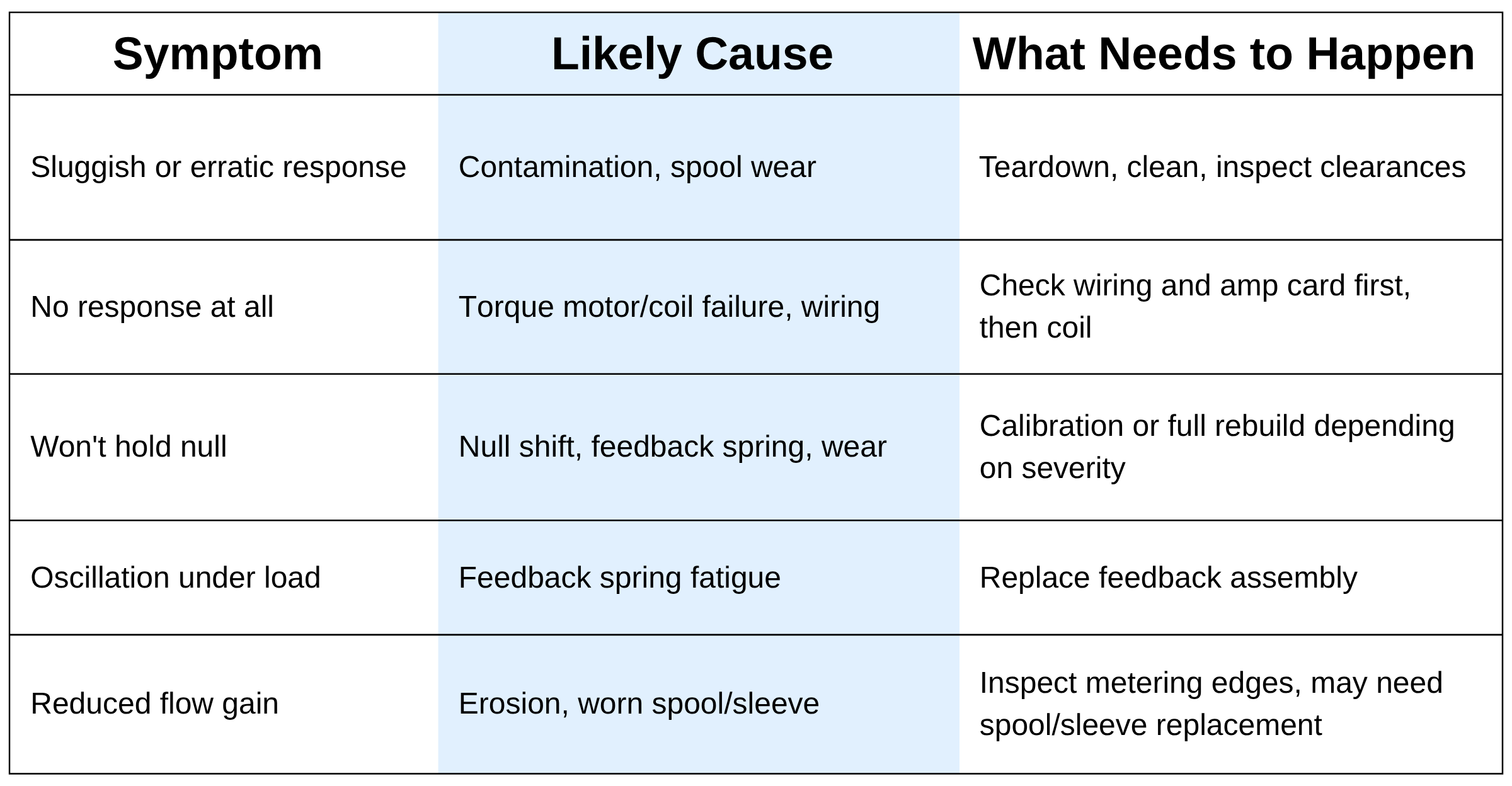
Catching Servo Valve Failure Signs Early
A servo valve that’s drifting or sticking is still running, just running badly. Left alone, it drags down part quality, throws off cycle times, and puts more wear on everything downstream of it. Pulling it for evaluation at the first sign of trouble is almost always cheaper than running it to failure.
When a servo valve comes to us, we tear it down, inspect every wear surface, test the torque motor and feedback assembly, and confirm exactly what failed before we quote anything. You get a straight answer on what’s wrong, not a guess.